
Make payment expectations clear before the groom
LeadFetch supports deposits and keeping a card on file through Stripe, alongside your salon's payment and cancellation terms. You choose the arrangements that fit your business and explain them before the appointment.
This guide explains the difference between a deposit, a saved card and an appointment confirmation, so you can set clear expectations with customers.
On this page
What does a grooming deposit do?
A deposit is money paid towards an appointment before the groom. It is different from keeping a card on file, which saves a payment method for a possible later charge.
In LeadFetch, review Payment choices in Settings and complete Stripe setup before requiring online payments. Check the amount or timing you want to request and the terms the customer will see. Your choices can distinguish new and returning customers.
A payment request and a confirmed appointment are separate parts of the process. Check the appointment status before telling the customer that their place is confirmed.
How is a card on file different?
Keeping a card on file lets a customer authorise a payment method through Stripe. LeadFetch does not ask you to copy card numbers into customer notes.
Card-on-file protection can support your late-cancellation policy, but a saved card is not money already received. A later charge can fail. Review the relevant authorisation, your policy and the payment result rather than assuming that a missed appointment has been paid for.
Agree your terms with the customer before relying on them. This guide explains product behaviour; it does not supply a cancellation policy for your business.
What should customers understand before booking?
Use your own clear, accurate terms. Make these practical details easy to find before the customer agrees:
- Whether a deposit, payment or card authorisation is needed, and when.
- How the customer should contact you to move or cancel an appointment.
- What your late-cancellation terms say and how they apply to the agreed visit.
- What happens next if a payment is incomplete or an appointment still needs your confirmation.
A fictional example: a deposit towards a full groom
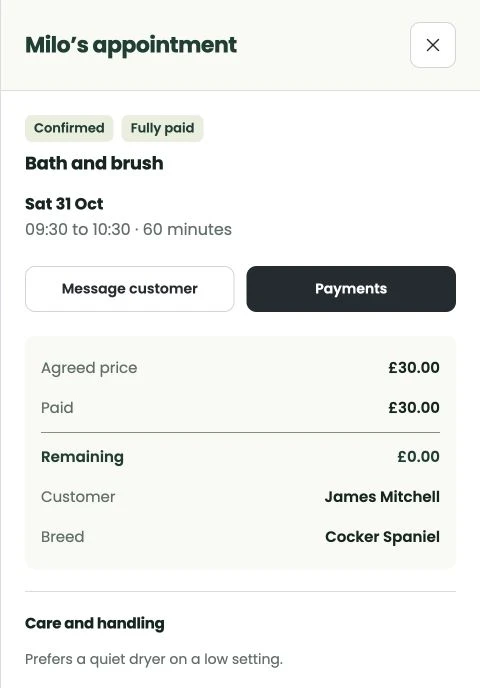
Suppose a salon agrees a £55 full groom and asks for a £15 deposit under its stated terms. Once the deposit has actually succeeded, £40 of that agreed price remains. These amounts illustrate the calculation; they are not LeadFetch's recommended prices or evidence of a customer's results.
If the visit changes, review the appointment, payment history and customer conversation together. A message saying that payment is due does not establish that it has been received. A reminder does not create a charge.
Keep payment records connected to the appointment
LeadFetch can keep payment history with the visit, including payments you record through your existing methods. Recording a cash or card-terminal payment is different from collecting an online payment through Stripe.
Check any balance and payment result before closing the visit. Payment processing arrangements and charges are separate from the LeadFetch subscription; check your Stripe account for the terms that apply to you.
Start with the salon checklist if you are still preparing your services, working hours and booking page.
Bring your bookings into one place
Set up LeadFetch around the way your grooming salon works.
Try LeadFetch